
EVOKING NLP INNOVATION
When we (Shelle Rose Charvet and myself) designed the book, Innovations in NLP, we focused on a simple objective— to create a book that would bring together the key innovations in NLP during the 1990s and 2000s.

 Share
Share



Preparing your audio…
You can keep reading while we get it ready.
- Waiting to start
- Creating audio
- Checking recording
Waiting to start
Audio ready
Tap Play to start listening.
AI-generated narrationListen at your own pace
Listen to this article
 Listen to this article
AI-generated narration
Narration covers the article text on this page. Linked documents and illustrations are not read aloud.
0:00--:--
Enable JavaScript to listen, or read the complete article below.
Reading preferences
Optional. Your reading and listening position stays in this browser, not in your public profile. Avoid enabling this on a shared device.
When we (Shelle Rose Charvet and myself) designed the book, Innovations in NLP, we focused on a simple objective— to create a book that would bring together the key innovations in NLP during the 1990s and 2000s. Nothing like this had ever been done before so when we started and when Shelle and I conceptualized the plan. We really didn’t have a sense of what would happen. But we moved forward. Having a pretty good sense of the field, we made a list of people who had made innovations that we knew about from the NLP journals, conferences, and our own personal experiences. [We certainly missed some and hope to have them in the next Volume of Innovations.]
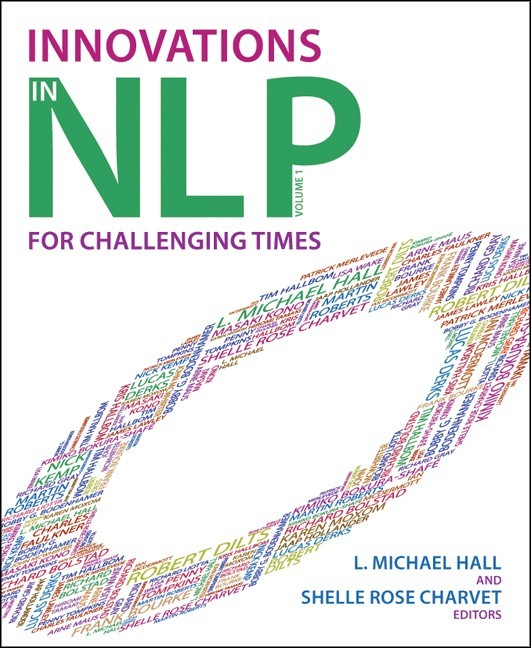
Having gotten the idea from the book Third Generation NLP by Robert Dilts and associates, we wanted to bring together, acknowledge, honor, and celebrate the key thinkers, developers, and innovators in the field of NLP. There was no thought about whether we agreed with or even liked the innovations. That wasn’t our concern. Our concern was to acknowledge and highlight that influential people in the field were creating and innovating new models, patterns, applications, and communities. So in that sense, the question was not whether it fit or did not fit with our vision of NLP, but whether people who come from the NLP premises were offering new ideas of practical value. If they were, we should recognize what they have done.
Now creativity differs from innovation. Creativity actually is the easy part. “Creativity is a dime a dozen” to quote Maslow. Innovation is much harder. Taking an idea and turning it into something practical, useful, and effective and then selling it to others so that it can be rolled out— that’s an incredibly more challenging proposition. So the book is not about creative ideas in NLP, it’s about actual innovations.
In planning and working on the book we were up against a 30-plus year trend— the trend that the field of NLP has not been very successful in cooperation, collaboration, synergy, or team work. This is as strange as it is sad. Strange because it grew from the roots of the first Human Potential Movement and the synergy that Maslow proclaimed and practiced with Rogers and many others. Strange because it grew out of family systems and gestalt and other expressions of working together. Yet sad because by failing to work together, the disease of raw and rugged individualism that destroyed the first Human Potential Movement continues its ravages today.
Anyway, Innovations in NLP: Volume I represents a move away from all of that as it makes a bold and courageous move toward a new age of collaboration. At least that is what Shelle and I hope will happen with the book. Now you can explore the key innovations in the field during the 1990s and 2000s as 24 contributors present 17 chapters.
Shipment has arrived: I have now received a shipment of 100 copies of the new book, they retail at $35. If you buy one for you and a second one for a friend, you can get both for $60, plus postage. To order: go to www.neurosemantics.com /
Click: Products / Books. Use Paypal.
Paperback — $35 Shipping: $5 if inside USA – $40 total
$14 if outside USA – $49 total