PICK AN ATTITUDE, ANY ATTITUDE
Knowing that you can choose an attitude, develop it, be coached for it, super-charge it, etc.
Reading preferences
Optional. Your reading and listening position stays in this browser, not in your public profile. Avoid enabling this on a shared device.
Knowing that you can choose an attitude, develop it, be coached for it, super-charge it, etc. what attitudes would you like to plan to add to your personal repertoire of attitudes which will, in turn, enrich your life? Now that you know that you can meta-state an attitude into existence, you know that you are not stuck with or in your attitudes—they are yours, you create them and you can recreate them. So what attitudes would you like to develop and set in your mind (in your meta place)?
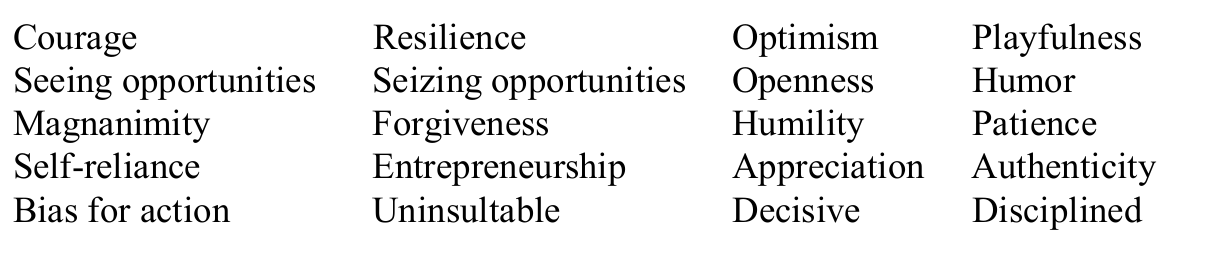
There is the attitude for learning. It is an attitude of being curious and playful, of being open and receptive, it is an attitude of wanting to know and to discover. While that may sound mundane, that is actually an incredibly powerful attitude to have. It is the secret ingredient in successful people and creative people who live on the cutting-edge of new developments. If you have a closed attitude, “I have learned enough.” “I already know that!” “What else is there to learn?” you cut yourself off from the human adventure itself.
There is the attitude of experimenting. This is an attitude of trying things to see what happens, it is an adventurous spirit that keeps you learning, keeps you young at heart. It is the apodeme of the scientific attitude itself. This leads to more tentative attitudes about the assertions we make and less rigidity about our beliefs. And that, in turn, leads to being more reasonable with each other and more humble in our approach.
There is the descriptive attitude. This attitude drives expert communicators, researchers, and inventors. Their attitude is always to seek to describe precisely and specifically whatever presents itself as it presents itself to the experiencing observer. This attitude results in as much "objectivity" as is possible for us subjective-thinkers and feelers.
There is the ecological attitude. As described in NLP, this attitude is about being holistic and integrative, about thinking and working systemically.
There is the empowerment or enrichment attitude. This attitude is governed by the question and focus, “Is this empowering? Will this enrich life? Will this bring you closer?” It is an attitude that leads to an active style of responding because one thinks, "I can always do something; I am never a victim at the mercy of outside forces. If I can’t change the outside world, I can always adjust my attitude on the inside.” Consequently this enables a more tough-minded attitude about life.
There is the compassionate and caring attitude. This is an attitude that sees others first as people, as human being, and only later in terms of roles, status, position, views, skin color, etc. It operates from the principle of equality of persons, mutuality, and a win/win attitude. It is the attitude of the Golden Rule, "Do unto others as you want them to do unto you" (Matthew 7:12).
There is, of course, the positive optimistic attitude. This is the attitude of looking for the silver lining in things, for solutions, for strengths, for win/win deals. This is the attitude of approaching life with a yes which then enables you to embrace life rather than fight it.
There is the attitude of ownership of one’s attitude. Viktor Frankl said this is “the ultimate freedom,” the freedom to choose your own attitude. "If one cannot change a situation that causes his suffering, he can still choose his attitude." (Frankl, 1984, p. 148).
There is the paradoxical attitude. This is a fun one and can be both shocking and delightfully surprising. Counter-intuitively your attitude to is embrace the very thing that your first response is to reject. Strange enough, frequently that then becomes the solution. The very symptom that we want to get away from only goes away after you embrace it. This has been proven true so often that, in therapy, it is called “prescribing the symptom.” And, as a paradoxical intervention, it emerges from a meta-stating process.
And what else? There is the attitude of acceptance, of acknowledging what is. The attitude of creative and positive defiance when standing up stubbornly for a value or belief can make a difference. There is the attitude of cheerfulness and appreciation. There is the philosophical attitude wherein you recognize and accept the limitations of life. There is the attitude of good will. There are dozens upon dozens of attitudes that you could choose that would upgrade the very quality of your life and they are there, in your meta place, just waiting for you!