STRATEGIC THINKING AND CHESS
If you want to make a deep dive into expertise, you need to learn to think strategically.

 Share
Share



Preparing your audio…
You can keep reading while we get it ready.
- Waiting to start
- Creating audio
- Checking recording
Waiting to start
Audio ready
Tap Play to start listening.
AI-generated narrationListen at your own pace
Listen to this article
 Listen to this article
AI-generated narration
Narration covers the article text on this page. Linked documents and illustrations are not read aloud.
0:00--:--
Enable JavaScript to listen, or read the complete article below.
Reading preferences
Optional. Your reading and listening position stays in this browser, not in your public profile. Avoid enabling this on a shared device.
If you want to make a deep dive into expertise, you need to learn to think strategically. When you learn this kind of thinking, you learn to think in terms of the future and you do so from today’s perspective. Strategic thinking is a Now—Then thinking that answers several questions: What do you want? Where are you today? What do you have to do to achieve your future vision? Having recently completed my next thinking book, Strategic Thinking, I realized that we could actually use the game of chess as a tool for developing this kind of thinking.
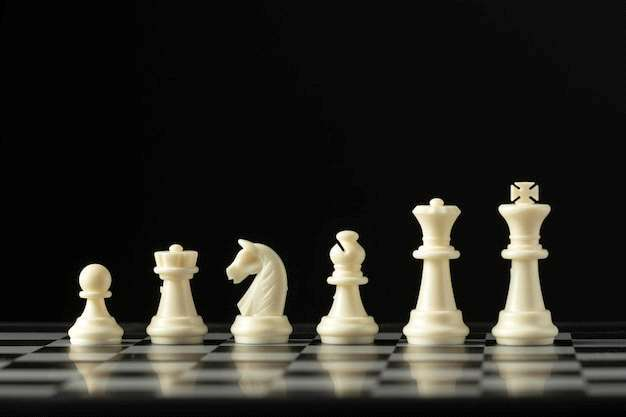
Now if there’s any game that without question facilitates strategic thinking, it is chess. And not only strategic thinking, but also tactical thinking. Now what’s fascinating about chess is that a young child can learn the required “knowledge” about chess in just a few minutes. It’s not that complex. There are only six kinds of players in the game— pawns, knights, bishops, rucks, the queen, and the king. And the way they move is also pretty simple. Only the knight is a bit strange as it moves in an “L” shape (two spaces forward, one to the side). So actually learning to play chess is remarkably easy.
What’s difficult is the complexity of the interactions of the parts. Now you have to do some strategic calculating about future consequences. “If I move X-piece to this or that space, what will happen?” In this, with chess you learn to consider lines of play—“If I do this, my partner will do this other thing.” Accordingly, you learn to calculate with care, with precision, and with concentration. And with that, you are learning to think strategically—you learn to think about the future from where you are today.
As you play chess, you learn to plan, but also you learn that the value of your planning does not last very long. As soon as you plan, and your partner makes a move, your plan goes out of the window. Now for some new planning. And while you do the long-term thinking of planning, in the meanwhile you have to do the short-term thinking of coping with the situation on the board and adapting to what’s happening right now.
Accordingly, to play well, you have to stay constantly alert to the feedback that you’re getting from the other player and manage your own state about mistakes. That’s because mistakes are inevitable especially when beginning to learn and even at the professional level, everyone makes mistakes. It’s part and parcel of the fun, the adventure, and the challenge.
The solution is to learn to see the whole game in all of its dynamism. And to do that is make systemic thinking part of your strategic thinking. Systemic thinking means understanding the whole will often have properties which do not arise from the sum of the parts. When everything is connected, then new properties can emerge. Jonathan Rowson explains:
“Chess players are intuitive systems thinkers because we learn tht if we do not see the relationships and interactions that define the whole position, we are key to misunderstand the parts, the pieces, and put them on th wrong squares. Chess can therefore be a source of tacit learning about systems.” (The Moves that Matter: A Chess Grandmaster on the Game of Life. 2019, p. 121)
“Chess can help you think of the world in relational and system terms and perhaps even cultivate some ecological sensibility. The game serves to highlight perspectives that can transform our understanding of how we might think more clearly and wisely.” (Ibid., 2019, p. 105)
The meta-detailing aspect of strategic thinking is learned as you play chess because to succeed you have given attention to minute detail. You might think it would be so simple to see six kinds of players and 16 pieces on each side—yet due to the many different kinds of interactions and the constant changing of the board, it requires a lot of focus. And not only focus, but keeping the pieces in mind. When you can do that, then you are getting into the place where you can do effective pattern recognition.
In chess, pattern recognition is the essence of strategic thinking. That’s because it is pattern detection whereby you grasp the complex system as a system which enables you to do relevant and effective calculations as you plan and adapt. From there you can begin to do effective heuristic thinking. That is, you use some basic guidelines (heuristics) to inform your strategy: Develop your nights before your bishops; Don’t move your queen in the opening; Capture towards the center.
The bottom line is that if you want to develop your strategic thinking skills—play chess. Chess gives you a desired outcome—checkmate your partner. Then with that goal, now you have to plan your moves to see if you can arrange things to achieve that outcome.