SYSTEMIC EXCELLENCE #3 Neuro-Semantic NLP as a System
The point of the previous Meta Reflection (#47) is that if we have a complete system in Neuro-Semantic NLP, we don’t need to be eclectic.

 Share
Share



Reading preferences
Optional. Your reading and listening position stays in this browser, not in your public profile. Avoid enabling this on a shared device.
The point of the previous Meta Reflection (#47) is that if we have a complete system in Neuro-Semantic NLP, we don’t need to be eclectic. And the fact is—we do have a complete system! The NLP Model and the Neuro-Semantic Model together provide a consistent, thorough, and systemic approach to working with people. That’s precisely why you do not serve yourself, or your participants, well when you drag in bits and pieces from other models, whether it is the Enneagram, EMDR, Thought-Field, or dozens of other models, etc.
Actually, when a person does that, he or she demonstrates a lack of fully understanding the richness of the Neuro-Semantic NLP Model and how to use it systemically and systematically. What follows comes from The Sourcebook of Magic, Volume II. This information provides details for understanding the systemic nature of this field. It is under the section, “NLP and Neuro-Semantics as Models” and focuses on the nature of a true model, model with a capital M.
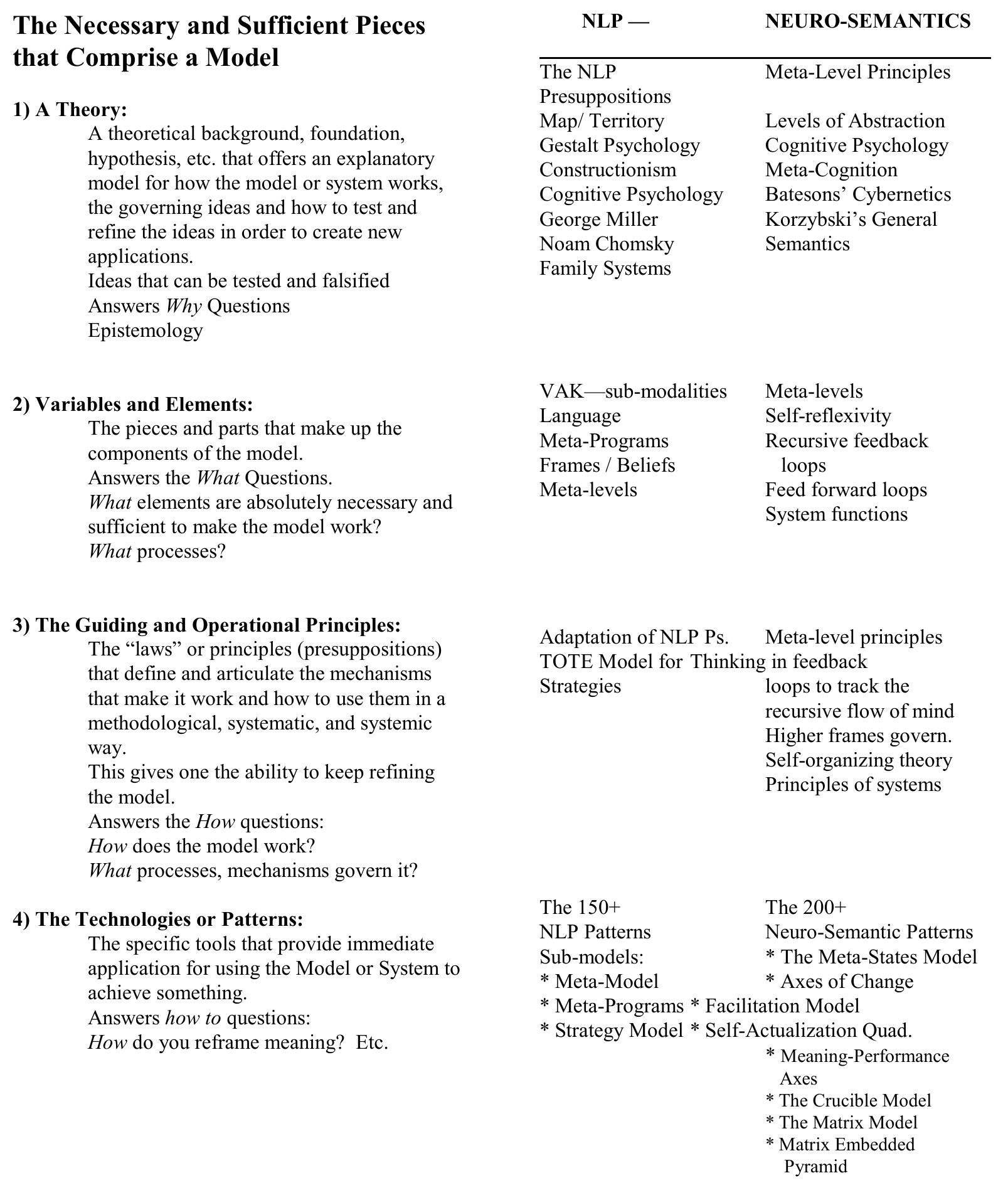
“Because we present NLP and Neuro-Semantics as models, a legitimate and profitable exploration can be had by questioning what a model is and what are the necessary and sufficient elements that make up a model.
- What does it take to have a full model?
- How is NLP a model?
- How is Meta-States and Neuro-Semantics a model?
As a model, NLP grew out of numerous models that preceded it as the co-developers enriched the former models and constructed a model about the structure of experience. This development of model building and refinement now continues with Neuro-Semantics. The key to the Neuro-Semantic updating and re-modeling of NLP has been driven by the going-meta process. The discovery of the Meta-States Model has enabled the remodeling of many of the facets and patterns in NLP. What happened is that we identified numerous meta-domains within NLP. For example, the discovery that sub-modalities were not sub, but actually the cinematic features of the representations, hence meta-modalities.
Nor is the process complete. Thinking more strategically and systemically about the models that we now have will enable us to continue to create more comprehensive models and refine the ones we have in the coming years.
NLP and Neuro-Semantics Compared