
WHAT ABOUT NASTY ATTITUDES?
I was just about to end this series when I got a question from a reader, “What about the nasty attitudes?”

 Share
Share



Preparing your audio…
You can keep reading while we get it ready.
- Waiting to start
- Creating audio
- Checking recording
Waiting to start
Audio ready
Tap Play to start listening.
AI-generated narrationListen at your own pace
Listen to this article
 Listen to this article
AI-generated narration
Narration covers the article text on this page. Linked documents and illustrations are not read aloud.
0:00--:--
Enable JavaScript to listen, or read the complete article below.
Reading preferences
Optional. Your reading and listening position stays in this browser, not in your public profile. Avoid enabling this on a shared device.
I was just about to end this series when I got a question from a reader, “What about the nasty attitudes?” In his email, he mentioned several—snobbishness, hostility, sarcasm, self- righteousness, etc. Then upon reflecting about the unpleasant and even the nasty attitudes, I realized that there really is a whole list of attitudes that are either unbecoming of a human being, downright ugly, or even toxic and dysfunctional. What attitudes sabotage a person’s highest meanings and best performances? Do any of these ring a bell or describe an attitude that you might fall into or take on—to your detriment?
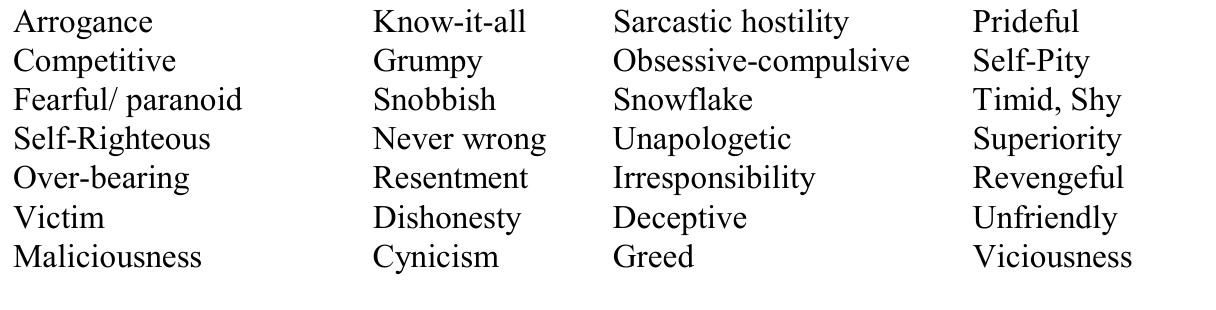
To answer the question, “What about them?” a good beginning place is to recognize where they come from. Here the answer is simple—living in a negative emotion or thought. When you live in a negative emotion (e.g., anger, fear, sadness, guilt, shame, etc.), you essentially habituate that emotion, and all the thoughts that come along with it, so that it becomes your automatic and default program. In that way your emotion becomes your mood. And as a mood, it is the attitude that you take in your mind, your body, your emotions, etc.—it becomes an attitude.
A snobbish, supercilious attitude comes from thinking you are better than others, from looking down on them, a haughty and disdaining feeling about others, feeling contempt for them, despising them, thinking that by pushing them down you push yourself up. A know-it-all attitude comes from the need to be right, the hatred of being wrong, the over-valuing of knowledge, competing with others as if that makes you better than them. A sarcastic attitude comes from repressed anger that you take out on others, using humor to put others down explicitly or implicitly. An obsessive-compulsive attitude arises from the need to be in control, a fear of being out-of-control, a perfectionist need to make everything just right. A timidity, fearful attitude comes from the lack of confidence in self to handle situations, an over-emphasis on the power and control of others or things. A shy attitude comes from fear of being seen, of wanting to hide, a fear of being inadequate, a rejection of embarrassment. A self-pity attitude comes from thinking that one is a victim, from feeling that you get no breaks, that the world is against you. A grumpy attitude comes from expecting or demanding that everything goes your way, from a lack of appreciation for what you do have, from not counting your blessings.
If you give yourself to the thoughts and emotions that correspond to any of these nasty attitudes, then, and lo and behold, eventually you will find that they have habituated and now they are your automatic thinking–feeling patterns. What began as just a thought, just a feeling, you have turned into a perpetuated mood. You have meta-stated yourself with them so that now they operate as your general frame of mind, to wit, your attitude.
In other words, you have violated one of the most basic principles in Meta-States. You have turned your mental and emotional generates against yourself. No wonder if feels like an uncontrollable monster or dragon. No wonder the attitude has you instead of you having the attitude.
What is a person to do? Simple. Reverse the construction of the nasty attitude. Stop turning the thought or emotion against yourself, stop setting it as your frame of reference and frame of mind. And as you do that, embrace the thought or feeling that you are experiencing as your thought and feeling about something at that moment. Paradoxically, by embracing it you free yourself from its domination and move to a choice point where you can now run an ecology check.
“Is this good for me?” “Will this serve me as a person or in my relationships?” “Will this support my health and well-being?”
If the answer is no, then you are in a position to make a creative and transformative choice. You can opt for a better thought and a better emotion that will improve the quality of your life and relationships. “What attitude would you prefer to have?”
Now perhaps once upon a time, in a given situation with a given person or group, the thoughts- and-feelings that you entertained were appropriate. Perhaps. But are they any longer? The damage is in perpetuating a negative awareness instead of embracing and using it and then releasing it. So, if you have perpetuated a nasty attitude and it is definitely getting in your way of unleashing your potentials—now is a great time to release it.