
WHY YOU NEED TO READ EXECUTIVE THINKING
I should have written Thinking for Humans first, but I did not.

 Share
Share



Preparing your audio…
You can keep reading while we get it ready.
- Waiting to start
- Creating audio
- Checking recording
Waiting to start
Audio ready
Tap Play to start listening.
AI-generated narrationListen at your own pace
Listen to this article
 Listen to this article
AI-generated narration
Narration covers the article text on this page. Linked documents and illustrations are not read aloud.
0:00--:--
Enable JavaScript to listen, or read the complete article below.
Reading preferences
Optional. Your reading and listening position stays in this browser, not in your public profile. Avoid enabling this on a shared device.
I should have written Thinking for Humans first, but I did not. I first wrote Executive Thinking. I recommend that you read it second. It is much more academic and therefore deeper.
From the Back Cover
The good news is that your brain anatomy equips you to think at higher executive levels. The neurology of your prefrontal cortex is designed for executive thinking. But do you think like a high quality and successful executive? Do you think like an executive in gathering information, questioning it, exploring possibilities, thinking long-term to check out consequences and repercussions, making intelligent decisions, etc.? Doing all of this is an inherent part of your biological heritage. Do you distinguish cause from symptoms, think systemically, and catch cognitive biases and flaws in your thinking? To what degree is executive critical thinking on-line and operational in your life?
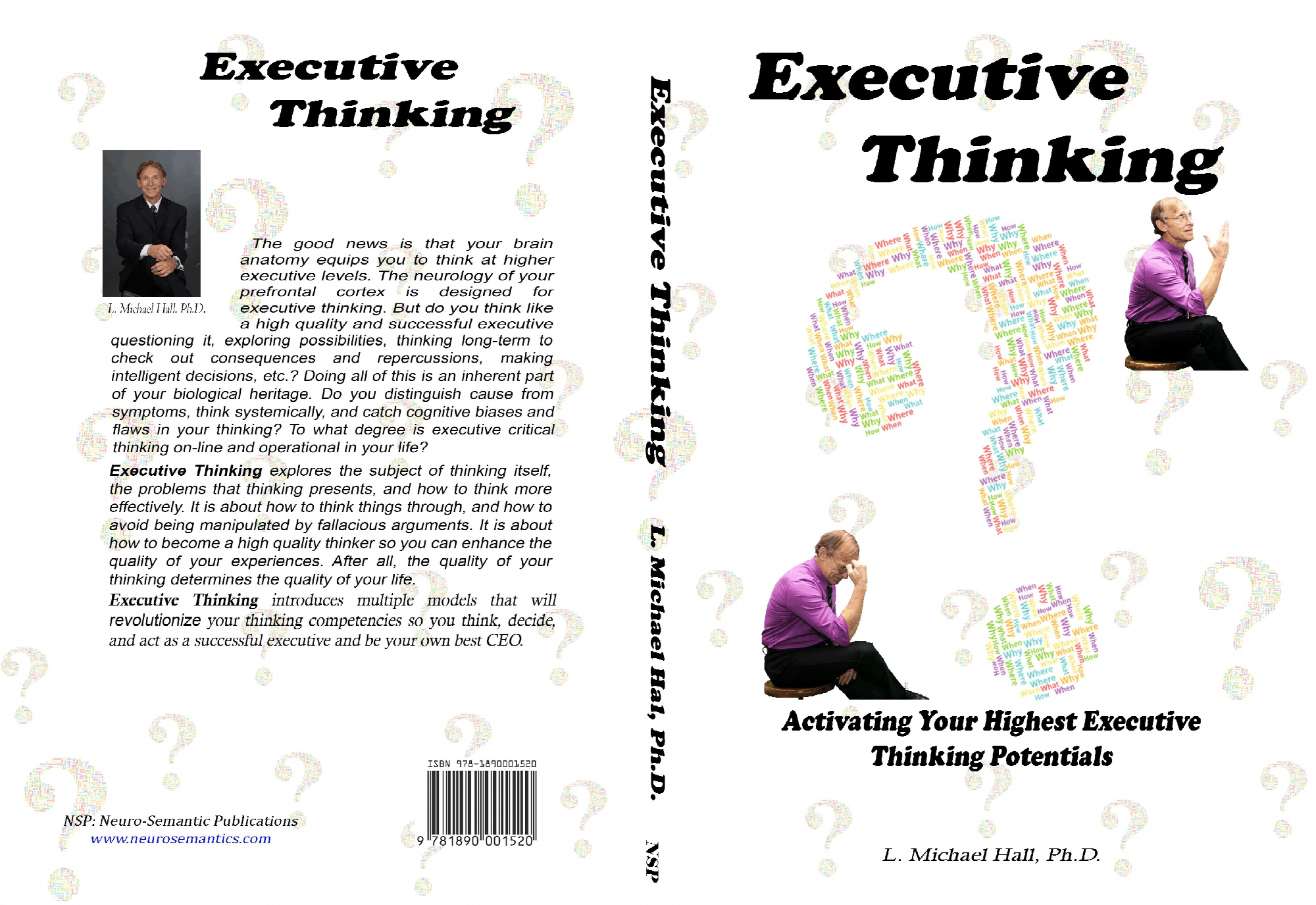
Executive Thinking explores the subject of thinking itself, the problems that thinking presents, and how to think more effectively. It is about critical thinking, it is about creative thinking, it is about how to think things through, and how to avoid being manipulated by fallacious arguments. It is about how to become a high quality thinker so you can enhance the quality of your experiences. After all, The quality of your thinking determines the quality of your life. Executive Thinking introduces multiple models that will revolutionize your thinking competencies so you think, decide, and act as a successful executive and be your own best CEO.
From the Preface
The best thinkers on Planet Earth are those who have somehow learned to use their minds in highly effective ways. They have learned to create an understanding of the world which enables them to take effective action in achieving their goals. They are executive thinkers. As a result, they invent great products and services. They start innovative companies. They stimulate billion-dollar industries. They live a life that makes sense (has meaning) and is meaningful (highly significant). They enjoy themselves and others thoroughly. And in the end, they leave the world a better place. Would you like to be one of them? Would you like to unleash your executive thinking potentials?
From the simple fact that they actually think and they think well, they construct mental models which then enable them to navigate the world according to their pleasure. They go places, achieve goals, and generate the experiences that make their life, and the life of others, rich, full, and of high quality. They have mastered the one and only tool that we human beings possess for living successfully —they use their minds effectively.
Who are these best thinkers on Planet Earth? Where do we find such people that we can model? Look no further than those who succeed in the two primary domains of life—work and love. Do they get along well with others? Do they love and are they loved? Do they take care of themselves and others? Do they have friends and colleagues who love and trust them? Are they productive in identifying their talents, developing their skills, and deploying them in business so that they can make a good living for themselves and contribute to others? Do they get things done and do so in a timely and effective manner? If so, let’s start with them and ask, “How do they do that?”
My hypothesis in writing this book is that highly successful people are critical thinkers who use their highest executive functions for thinking. This does not require that they have the highest I.Q. It does, however, require that they use their mind and engage in the most unique activity of all, one that so few actually engage in—real thinking —thinking that is both critical and creative— executive thinking.
The real thinkers do not focus on academic knowledge. Instead they focus on the actual intelligence of using their thinking capacities well in practical matters. This is their secret. They think so that they can do. This practical intelligence is an integrated thinking that enables them to both think and act. Generally they are successful entrepreneurs who make things work, invent new products and services, and new ways of doing things. They are executives who combine vision with action. For that reason I describe this kind of thinking as executive thinking.
In calling it executive thinking, this does not mean that all people in executive roles do this kind of high quality thinking. Obviously, many do not. In fact, most do not. Yet this kind of thinking does partake of the highest form of human thinking—the kind that comes from the executive functions and levels in the brain. So “executive” partly refers to using the executive levels of your mind, your frontal cortex where you make conscious decisions about yourself, your values, your life, your direction, the meanings you ascribe to things.
This is mindfulness—an executive level functioning that enables you to use your mind consciously regarding how you are thinking and acting. Robert Sternberg teasingly wrote:
“Every once in a while, a great thinker comes along— a Freud, a Piaget, a Chomsky, or even an Einstein— and shows us a new way to think. That is not to say that great thinkers never make mistakes. On the contrary making mistakes is inevitable when you’re exploring new territory. But they learn from their mistakes—or enable us to learn from them.” (1996, p. 202)
What distinguishes the best executive thinkers is both what they think and even more important, how they think. The first is “knowledge,” the second is intelligence. Together they determine quality thinking. When you examine their thinking, it is rich, open, and flexible. They have developed their thinking skills so that now their thinking is clear and precise, it is inspirational and visionary, and it is practical and pragmatic. They think simultaneously both critically and creatively. Their thinking is expansive, wild and chaotic at times, then they bring it down to earth in specific details and how-to instructions. Tavis and Wade note this quality of thinking:
“You can’t separate critical thinking from creative thinking, for it is only when you question what is that you can begin to imagine what can be.” (1995)
Executive thinking is the high quality thinking that characterizes highly successful executives—men and women who lead entrepreneurial enterprises and who are changing the world for the better.