
WHY YOU NEED TO READ THINKING FOR HUMANS The Art of Mindful Awareness
Above and beyond the world that you live in and deal with, there is another world that you carry in your head—a mental model of the world.

 Share
Share



Preparing your audio…
You can keep reading while we get it ready.
- Waiting to start
- Creating audio
- Checking recording
Waiting to start
Audio ready
Tap Play to start listening.
AI-generated narrationListen at your own pace
Listen to this article
 Listen to this article
AI-generated narration
Narration covers the article text on this page. Linked documents and illustrations are not read aloud.
0:00--:--
Enable JavaScript to listen, or read the complete article below.
Reading preferences
Optional. Your reading and listening position stays in this browser, not in your public profile. Avoid enabling this on a shared device.
From the Back Cover
Above and beyond the world that you live in and deal with, there is another world that you carry in your head—a mental model of the world. Because it is above and beyond the outside world, it is your mind or Meta Place. Actually this world in your head is the only world that you know and ever will know. It is in this world that you think. But how well do you think? Is your thinking creating a life of love, joy, and productivity for you?
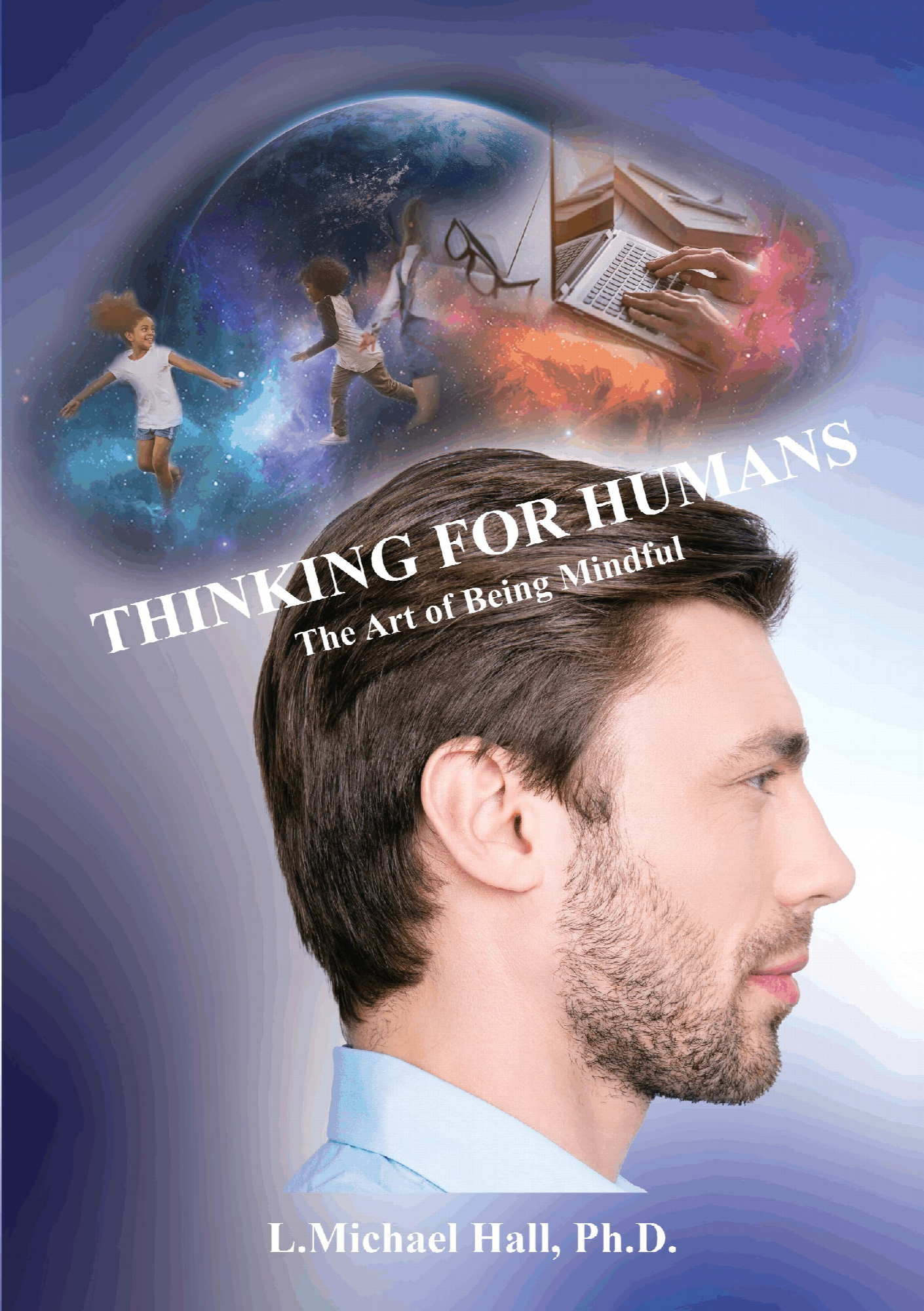
Thinking is the most human thing that you do. It is the lifeblood of everything human: communication, sense of self, sanity, understanding, belief, hope, and love, creativity, innovations, well-being, etc. While some people think clearly, precisely, accurately, creatively, most people are poor thinkers. They constantly think themselves into painful states of stress, fear, guilt, anger, being a victim, etc. They think themselves into unproductive habits (over-eating, drugging, gambling, etc.) or into destructive social habits (criticizing, blaming, gossiping, competing, etc.). Thinking for Humans focuses on the thinking skills or powers that transform your thinking making it clear and precise, critical and creative, productive and inspirational. As you learn to think about your thinking, you will unleash your potentials for your best performances. With meta-thinking skills, you will solve problems, banish pseudo-problems, create inspirational meanings for yourself and others, become a leader of minds and hearts, and much more. If the quality of your thinking determines the quality of your life, what is the level of quality does your thinking habits reveal?
From the Preface
“Thinking is very hard work. And management fashions are a wonderful substitute for thinking.”
Tom Davenport
“Peter F. Drucker, CIO Magazine, 1997
I have written Thinking For Humans because of what I believe about thinking and about its incredibly extensive effects within the human experience. Here’s what I believe:
- The quality of your life is the quality of your thinking.
- To be “fully alive/fully human” requires the ability to truly and authentically think and think for yourself.
- Thinking lies at the core of everything that we do that’s human.
- As you think, so you are and so you are becoming. Your thinking defines you and shapes your inner self and “personality.”
- The quality of your beliefs, decisions, emotions, memories, knowledge, imaginations, etc. depends on the quality of your thinking.
- To manage your thinking requires that you think about your thinking, to use your meta-cognition to meta-think.
- Meta-thinking enables a special kind of learning— meta-learning by which you can then manage the quality of your thinking.
An Untaught Essential
While thinking is the most fundamental thing you do, the great majority of people have never been taught how to truly think. That’s because at school we are taught what to think; we are not taught how to think. Thinking was, and continues to be, assumed and taken for granted. It should not. Consequently, the great majority of people are poor thinkers. Their thinking is superficial and is easily dominated and distorted by emotions. As the quality of their thinking is low, this causes most of their problems in life. Shockingly, we mostly think our way into difficulties as we fail to discern quality information, make bad decisions, engage in stupid actions, create disastrous relationships, etc. All of that sabotages one’s best efforts. The good news is that you can think your way out of those problems by learning the genuine article—critical and precise thinking.
“... the problem is that we think very poorly. How could it be otherwise when few of us are given any instruction...” Steven Alan, Thinking Creatically (1991, p. ix)
If thinking governs the way you learn, the way you comprehend the world, the way you make decisions, the way you relate to others, the way you manage yourself, the way you treat yourself and others, no wonder thinking plays the most critical role in your successes and failures. Yet most people dismiss thinking as unimportant. They assume that “thinking is thinking” and “what else could it be?” They don’t know that a person’s brain could be active without the person actually thinking. They don’t know there are multiple kinds of non-thinking. In each, a person may seem to be thinking, and he may think that he’s thinking, but he is not actually “thinking” (chapter 21).
The Book’s Design
Thinking For Humans focuses centrally on the most fundamental thing you do—think. Part I has the most fundamental aspects of thinking and a series of chapters on essential thinking skills. Is thinking a skill? Yes, so think of thinking as a skill—a mental activity that gives you a lease on life. Parts II and III covers the constructive or eureka thinking skills and the executive thinking skills.
Part IV: The seven kinds of deceptive non-thinking aspects—aspects we all default to and which cause most of our problems. By knowing these and shifting to real thinking, you will solve most of the problems you will ever face. You will become an excellent problem solver. Intelligence is not a trait, but a function of thinking.
The central theme: The quality of your thinking determines the quality of your mental and emotional well-being. A central component of mental and emotional illness is poor thinking—distorted thinking, and thinking that is not under your control. When you correct your thinking—you set in motion a healthy way of moving through the world that makes you more effective and productive, that makes the way you relate to family and friends more rewarding and loving, and the life you live more joyful.
“The neurotic is not emotionally sick— he is cognitively wrong! If health and neurosis are, respectively, correct and incorrect perceptions of reality, propositions of fact and propositions of value merge in this area...” (Maslow, 1970, p. 153)
Thinking seems so natural so why spend time learning how to think? Because most people are not actually thinking! Actually, thinking is your secret weapon for succeeding in every aspect of life. It is the secret for sanity and well-being, for healthy relationships and productive careers.